
Unmoored Rooms: Vessels, Thresholds and Memory
Onassis AIR Residency Proposal
Residency Focus
Translating Vessel forms from object based work into spatial structures
Experimenting with apertures, thresholds and obstructed viewpoints
Developing symbolic elements as architectural and tactile components
Engaging in critical dialogue and mentoring to refine spatial and conceptual clarity
The Proposal
This residency will investigate how vessel forms can act as architectural thresholds to mediate memory and instability, expanding symbolic containers into spatial cognition. This direction would expand my existing vessel based practice further into spacial and installation contexts. To do this I will leverage my most commonly used materials (ceramic, wood, textiles) with an underlying aspect of material contrast and representation, each holding distinct conceptual importance. Surface design will be critical to connect the threads of the work together under a single visual identity and narrative. This residency offers a valuable framework to support outcomes driven research through material experimentation, mentoring and peer feedback.
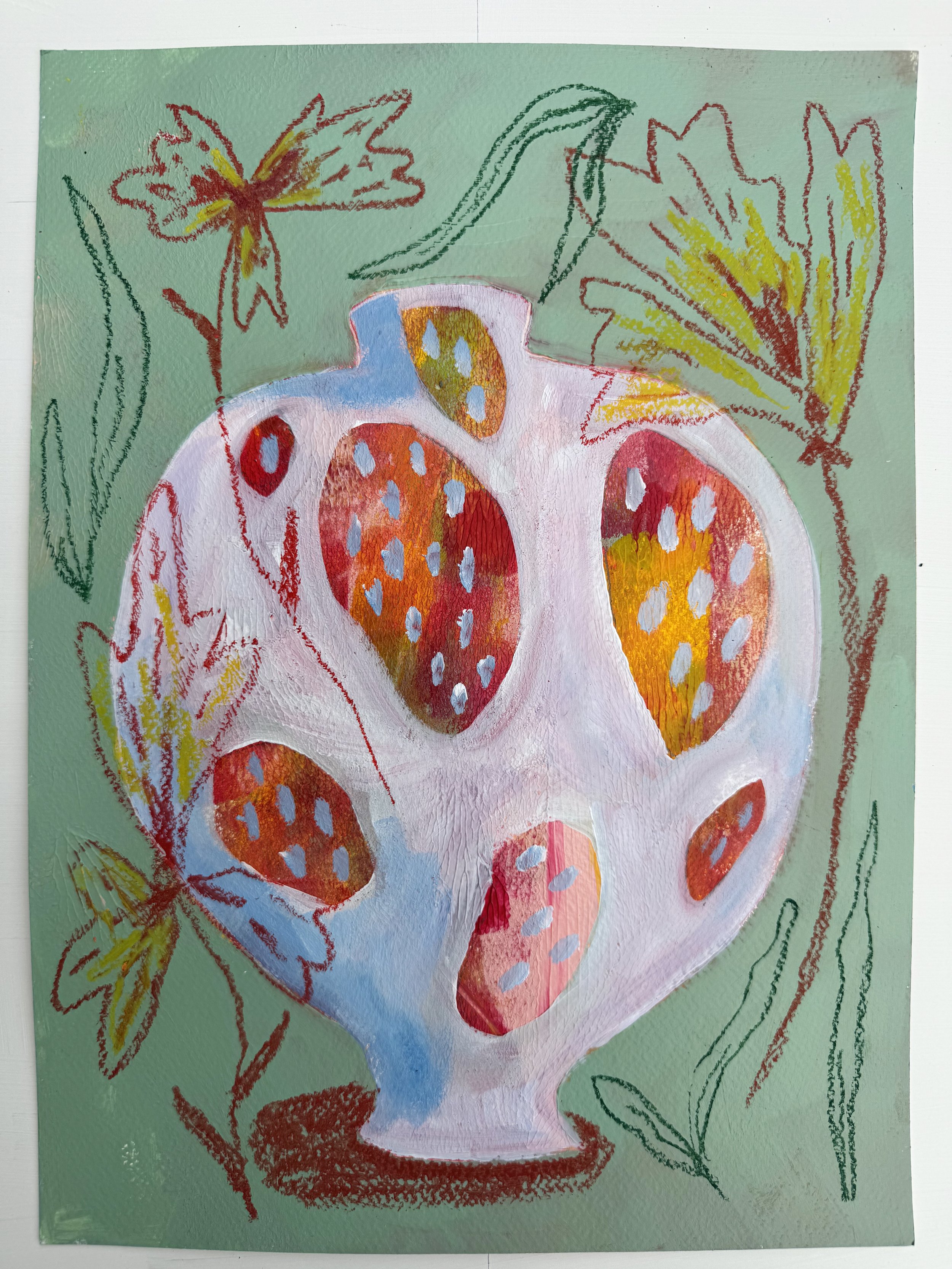
Vessels have long formed the conceptual and visual core of my work; vases and house like forms recur as central structures, often distorted with pockets or apertures that nod to interior worlds.These forms are designed to convey transitional spaces rather than the limitations of fixed objects. Memory associated to an object bleeds through and alters his form. They demonstrate tension between the known and the withheld.
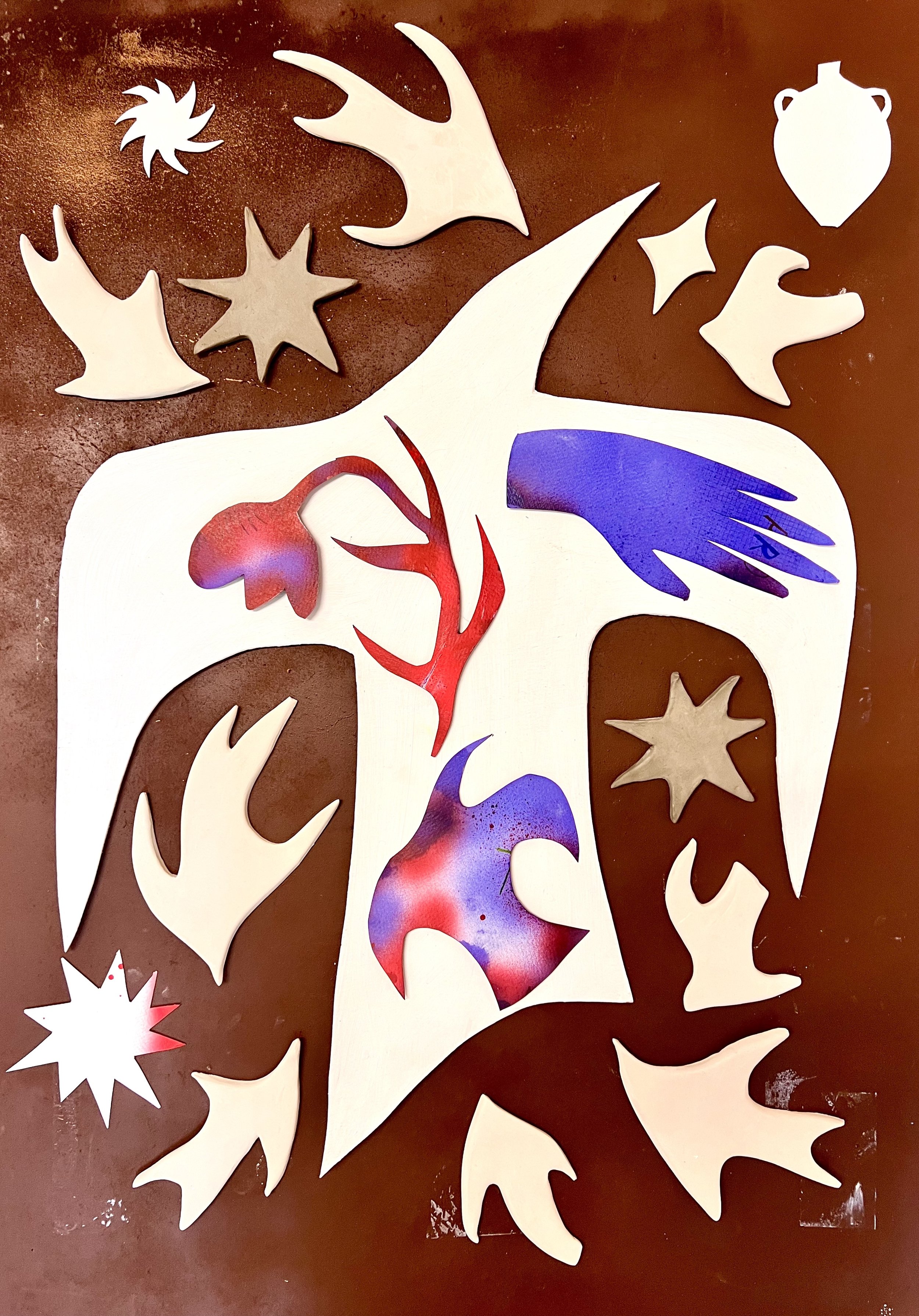
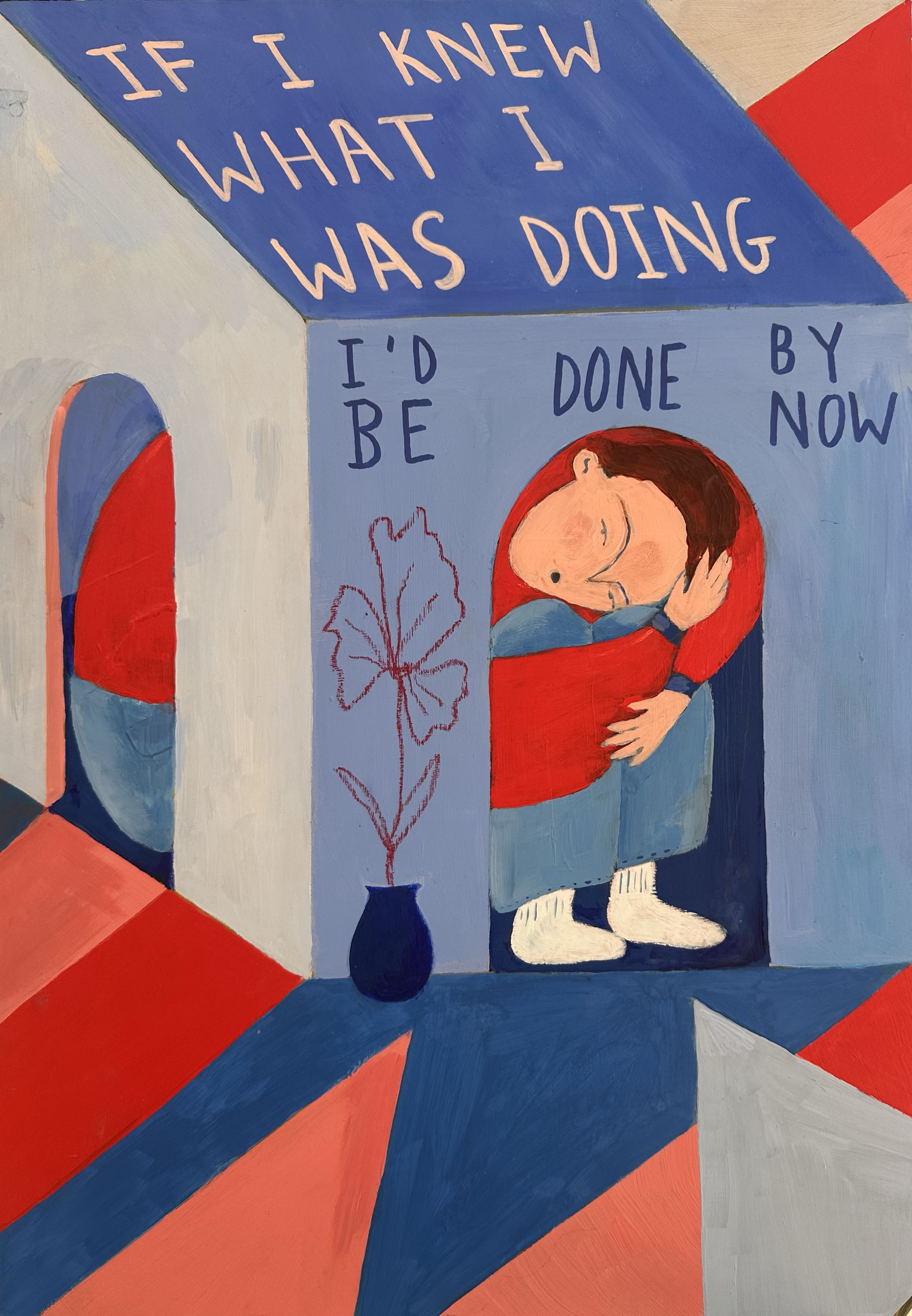
This residency will allow me to continue to deliver further on scale in a structured environment; extending this logic from the object into the room; exploring how vessel forms may become environments to be entered, navigated, or partially obscured. Accompanying these vessels, I work with a recurring symbolic language, birds, hands, suns, flora, fauna. These elements behave as scaled-back representations of core memories, often shared in liminal state, recurring across different media. A core theme of the work is on migration and dual identity; from one place to another, always feeling like a foreigner or an outsider. In this aspect, I am the vessel and I am in two places at once. This is aided through symbolic context, particularly through birds as figures of movement and orientation, and houses as provisional shelters. This repetition creates a visual system that feels familiar and nostalgic, with an underlying feeling dislocation and instability.
Material contrast is central to the development of the work. Ceramics, with both fragility and permanence, will be placed in dialogue with textiles; warm and tactile. Painting operates as an intermediary surface technique, intentionally scaling up and sometimes partially obscured, often acting as a threshold rather than a fully accessible image. One area of research involves large painted surfaces viewed through restrictive apertures , reinforcing the idea of perception as partial and mediated. Another involves scaling up objects to be entered and navigated as you move through different inner and competing aspects of the narrative.
By prototyping and spatial testing during this period, this residency will solidify my transition from object based narrative into outcomes based spatial research. I intend to dedicate the entirety of the ten week residency period to maximising these opportunities; mentoring and peer discussion will be key. This proposal mirrors the conceptual threads of containment, separation, and the unseen which runs throughout my work.
Use of Funding and Support
Residency funding will support material research, including clay, glaze, textiles, structural supports, and painting materials.
It will heavily contribute to fabrication costs such as kiln access and specialist processes and would provide the necessary factors to deepen a symbolic inquiry that is already central to my practice.
I would be deeply committed to mentoring support throughout for critical development on my research direction, particularly seeking guidance on composition and scale as the work moves into a larger space, as well as feedback on my visual language and representation. In addition, one of the core benefits of this program would be mutual engagement in peer feedback discussions as I have found these to be an invaluable source of refinement throughout my art education and career, and currently is lacking. I would also look to seek out opportunities to engage with the wider community during open days, as a way to showcase the development of the project and gain early response and interest.
Below I have calculated required costs for a singular installation as a potential outcome of this residency.
Shelter and Cage Installation:
MDF Boards 175 EUR
Tiles 420 EUR
Fixings, adhesives, grouts and sealants 75 EUR
Paint & primer for structure interior 160 EUR
Ceramic components (clay, glaze, underglaze) 350 EUR*
Ceramic firing costs 250 EUR*
Hanging fixtures (wire, metal rods, hooks, reinforcements) 325
Total projected cost for this Installation 1755 EUR
*A 10-15% contingency cost has been included in the budget projection to ensure responsible financial planning and execution of the work to a professional standard. Ceramic production carries inherent risk (breakage during firing, glaze testing, refiring requirements), and structural installation may require additional reinforcement once assembled in situ to meet safety and stability standards.
Thank you for your time
Their attention to detail and commitment to quality truly stood out. We’ve already recommended them to others.
—Former Customer